Friday, October 26, 2018

Addressing Trauma In School - Kristen McLeod

 Addressing Trauma In School - Kristen McLeod

“Understanding leads to efficacy, which leads to hope”

Trauma is everywhere
25% of kids entering JK have experienced trauma (that we know of)
68-70% by 17 years of age

Should we be addressing individual students or groups/classrooms?

- Trauma is #1 predictor of school attendance across numerous students
- In school-based studies, number one predictor of behavioural health problems in school-aged children and youth.
-A linear relationship between trauma exposure and the likelihood of:
...academic concerns, suspension, expulsion and dropping out
...lower achievement scores
...language programs and identification of learning problems
...referral to special education service

Trauma impacts learning directly - especially trauma that occurs in years 1- 3
- can impact low motivation related to external locus of control/powerlessness/anticipation of
failure/perceived low impact on the world.

Hand model dan siegel


Sensory systems impaired in students with trauma.

The limbic system is the emotional control centre
- hippocampus - emotional learning. emotional memory, manages what info gets sent from Amygdala
FIght, Flight, Freeze system.  All or none - take all energy from the rest of the brain.  If run, run for a long time before start thinking rationally again
Flight as a mean think first then runs.

Kids experience trauma when the teacher in the classroom can't handle a traumatic situation.

The developmental Trauma Disorder

Universal Needs
- treated with respect
- value and valued
- empowered
- safe in a relationship

Understanding Regulation
Regulation model/pyramid
Pro-social Regulation- rule follower
Social Regulation -  peer relationship
Cognitive Regulation - Processing Language
Emotional Regulation - Express, understand, show emotions
Arousal Regulation - Stress response system
SAFE RELATIONSHIPS

Diagnoses for kids with trauma is ADHD or Anxiety because their bottom 'sucks'  Arousal regulation

When the pyramid crumbles we either fight Flight or Freeze
Build the brain to build the pyramid.
Buil up the top to support the bottom...the bottom is impaired through trauma.

The window of tolerance. How we manage arousal regulation.
Optimal arousal is between high arousal and low arousal. (Trauma - narrows the window of tolerance)
TOO LITTLE AROUSAL: emotionless, numb, tuned out, withdrawn, disconnected, shut down. takes them out of their window of tolerance.  (Suspensions don't work)

How We Regulate
-auto-regulation  What we do unconsciously
-Co-regulation - helping others regulate
- Self-Regulation - flexible skills with a good foundation
- Post-traumatic ADAPTATIONS (not behaviours)

The Shame of Trauma
- some of our interventions, shame turns them off.
-part of trauma about psychology.
- I'm wrong, I'm useless.... it's my fault.
- Push away the people they need most, because they are afraid they are going to hurt them.
-Grow shame by going too quickly to the top of the pyramid.

Trauma is illogical and shame is a huge driver.


Monday, November 6, 2017

Youth at Risk: No Problems, Just Solutions

7 Lesson School Teacher - John Gato

1st day of school teachers are concerned about Control. Hat conversation
Its easier to build strong children than repair broken men.

What made a teacher stand out - made you feel engaged.

4 pillars of engagement:
Belonging -
Power -Setting goals
Freedom -input for rules/consequences
Fun - creative/relative

Transactional Analysis
P - Parent (critical or Caring)
A - Adult
C - Child (rebellious, needy)
Ego states - Any interaction with 2 people are in these states
Best interactions are A to A

Part of engaging a student is through adult to adult interactions.
Who are you?  Sometimes students come in already in a specific state (possibly looking to hook you)

Students at risk like an iceberg - behavior on the top but its due to everything underneath.
Spheres of influence

Stepstojustice.ca

Tapping in VLS for VSL Visual Literacy Solutions for Visual Student Learners

Experiential learning mindmap

Multiple intellegence is gone Gardner will now do.
5 Minds of the Future
Disciplinary mind - mastery of schools of thought (science, math, english,  1 professional craft)
Synthesizing mind - integrating ideas from different disciplines and communicating it
xxxxv-come up with something new
respectful mind - appreciation for differences between people
ethical mind - responsibility on 2 fronts - work front, citizenship front

Tuesday, April 25, 2017

Waterloo Region Integrated Drug Strategy


A community response to problematic substance use.

Actions for change through 4 pillars

1. Prevention
- a wide representation of stakeholders. resources include a website, mobile apps, literature and best practices for youth, parents, teachers. Naloxone kits (reverse effects of opioid overdose - only works for approx. 30min.)

Trying to determine how many overdoses occur in the community. Currently, no means to track this information.
4 key elements
Monitoring - anonymous reporting via www.omars.ca
Alerts - subscribe and receive Alerts issued by WRIDS regarding tainted substances
Responses - information on how and where to access naloxone

Education and Training - training on harm reduction and naloxone administrations

2. Harm Reduction
Co-leading with OMARS
Harm reduction programs (Naloxone distribution and overdose prevention via Sanguen)
Sharp disposal sites
Overdose prevention working group

3. Rehabilitation and recovery
- Rapid Access Addiction Medicine (RAAM) quick access to an addiction physical and counsellor. Establishes a care pathway between the emergency room, addiction medicine clinic, withdrawal management services and family doctors. Being piloted....still a "ways away" from implementing.

4. Justice and Enforcement
- Care pathways for those encountering police. (Transition plans after treatment/diversion ex.housing options)

91 individuals through 50 agencies involved.

Outcomes established in the following areas:
- System
- Service
- Individual

Signs and symptoms of opioid use.
- tired, pin point eyes, blue eyes ears fingers etc.
Naloxone is only effective with opioids

Info from SRO - B. Mikols

Trends
Gate keepers (like the DD) sits with the naloxone kit while others sample drugs.

In the next month every police officer in Waterloo region will be carrying Naloxone on patrol.

Fentanyl can be in powder, pill, liquid form.
Can be absorbed by inhaling, touch, ingest
Police will use gloves when searching. not search in unseen areas.

Carfentanyl - for large animals (horses).

School trends - Marijuana (still illegal)


Thursday, February 23, 2017

Deeper Conversations on Education and Career/Life Planning: Supporting the Highly Skilled Workforce Recommendations


All Resources Here

Technology is replacing entry-level job positions. (workplace students)

How can schools prepare all students for the world of work that is ever changing ahead of them?

Amount of money students can get is determined by financial needs
Ed. Costs (Books, tuition, Living expenses) - Financial contribution (students, parents, scholarships/bursaries) = Financial Need

Cost of education is a shared responsibility between, students, parents, institutions, and government.

Use the estimator. www.ontario.ca/osap

Resources: ontario.ca/OSAPpartners

Future Jobs - Rich Weiner


Wednesday, January 25, 2017

Violent Threat/Risk Assessment Training


The better the data the better the assessment the better the intervention.

If you don't' know what got them into the gang how do you expect to get them out.
- You can't use the same strategies for everyone.

Multi-discipline team can connect more data than one person.

If threat is Clear, direct and plausible - Plausible is most important.

Under reaction is the biggest problem.

Assume whoever comes forward was elected by a larger population.  Once build rapport ask "Who else knows about this?"

If someone communicates signs and we do nothing then you increase their risk.

Serious violence is not a straight line. Many offenders go through an evolutionary process, and its contextual no one just snaps.  People can go in and out of risk before committing act.

It's one thing to make a threat it's another to be able to act on it. Kill you vs. Stick this knife in our throat

Artificial lowering of risk. Not addressing the issue.

High profile cases doesn't cause violence it intensifies feelings/symptoms of violence already present.

The more they can identify will the aggressor/victim the more it will increase symptom development.

Locker dynamic - Find evidence in student's locker, backpack, desks, assignments, vehicles friends lockers - weapons, lists etc.

Bedroom Dynamic - evidence of planning - Many parents had not been in kids bedroom for over a year. Domain of the police - search warrant, or interview parents, F&CS

Social Networking Dynamic - can be the most blatant source of evidence.

History of Target Selection
Site Selection
Frequency
Intensity
Recency
All of these determine Baseline. Shift in baseline determines evolution in violence.

Hypothesis
1- cry for help
2 - conspiracy theory of 2 or more - puppet master

Day 2
naturally open leaders look for opportunities to openly share information for the systems they are responsible for.

Closed leaders look for reasons not to share information for the benefit of themselves.

VTRA stage 1 trumps Suspension

the question is not..the mental health diagnosis is the reason for the violence but. How much is the mental health diagnosis affecting the behaviour?

Wednesday, April 13, 2016

Habits of Highly Effective Leaders

Nick Teti - CPCO

'Before you are a leader, success is all about growing yourself. When you become a leader, success is all about growing others." Jack Welch

Why would someone follow you? (Self reflection)

Authentic - trust, integrity, honest, genuine
They believe you know what your are doing.
You have direction - heading in a direction others want to go.
Ability - make a difference
Trustworthy
Exercise of influence
Jesus did not come to be served, but to serve.
Integrity is all encompassing (You define yourself when no one is watching)
Trust - The foundational principle that holds all relationships.
"Building trust on a team requires shared experiences over time"
Trust is built on Character and Competence

Emotional Bank Account - Build Trust
Six Major Deposits
1. understanding the individual
2. Attending to the little things
3. Keeping commitments
4. Clarifying expectations
5. Showing personal integrity
6. Apologizing sincerely when you make a withdrawal.


1. Proactivite
Use proactive language vs. reactive language


"Between stimulus and response, there is a space. In that space lies our freedom and power to choose our response. In our response lies our growth and freedom" Viktor Frankl

Circle of influence and Circle of Concern


2. Begin with the end in mind
All things are created twice.
First a mental creation, followed by the physical creation
- Focus on creating the shared vision
- Then focus on the execution of the vision

A clear Vision creates followers - Simon Sinek

3. Put first things first

4. Think win/win
Doesn't have to always be win-win
Agreements and solutions are mutually beneficial -
Life is about cooperation not competition

Abundance vs. Scarcity Mindset.

See the problem from the other point of view
Identify key issues and concerns
Determine what results would constitute a fully acceptable solution
Look at new options


5. Seek first to understand, then be understood
Empathetic Listening - Listening with the intent to understand


6. TEAM -Together Everyone Achieves More
Synergy - Increas levels of communication to get Synergy (Win-Win)

7. Sharpen the Saw
If I had six hours to chop down a tree, I'd spend the first 4 hours sharpening the axe.
Physical - Mental - Spiritual - Social/Emotional

Empower Others
If we delegate tasks you will build followers
If we delegate Authority you will build leaders
It's not about recruiting followers but instead building leaders who can change the world


Tuesday, April 12, 2016

e_Assessment FOR learning techniques

Andrew Schmitt
https://sites.google.com/a/tdsb.on.ca/the-tall-teacher/presentations/ontario-summit16
Assessment for Learning is the key way for teachers to advance the learning for students.  Technology can be used to transform the learning experiences for our students.  What happens when you bring the two together?  Explore some ways that technology can be used to transform the way that teachers are assessing their students with the ultimate goal of moving the learner forward and improving student achievement.  

How well do you know your students.Exam paper - lotto instant kiwi commercial video

When teachers try to change more than 2-3 things at the same time it often deteriorates the teaching.
Where the learning is going, where the learning is right now, how to get there.
Use SAMR as a self reflective tool to see how you are using technology. also tie it into assessment.
key Strategy - 
1.Clarifying, sharing, and understanding learning goals and success criteria.
- Use a google form and students must create test questions.
- turn success criteria into a google form that students fill out - use it for teacher purpose to see if students know how to be successful.
FormMule - have form emailed to user.

2. eliciting evidence of learners' achievement.

Plickers app.
Poll everywhere
3. provide feedback to move the thinker forward.
video - feedback on learning. ego involving vs. task involving.
Successful feedback - what students need to do to improve and how to go about doing it.
Good feedback causes thinking.

Ask Three questions in students work an write corresponding questions at the bottom.
Bookmark  text in google doc. allows you to link to text.
Conditional formatting in a spreadsheet.  use colour to identify things that stand out. - allows to see trends.
Descriptive feedback is only beneficial if you give them time to improve.
Activating students as instructional resources.

Jaime Casap - Keynote

Jaime Casap - Keynote - Chief Education Evangelist for Google


Importance of Education - Education disrupts poverty, it changes lives.
Reach higher - think of goals beyond high school - Initiative by gov't of USA.
The impact and power of education lasts for generations.
Education isn't broken - the world around us has changed and we don't live in that world.
Need to have discussions around what is the right education system/model for the economy we are facing.
Need deeper skills - 60+% of jobs require post secondary education.
Computer science is an important topic for future degrees because of the role of technology in our lives.
Knowledge is at everyone's fingertips from the internet, how do we flip education to embrace this?
Why is it important
1 - Unable to implement good learning based on current educational system. Need to use technology to provide good learning
2 - Technology has wrapped itself around everyone's lives and we don't even see technology because it is common place.
3. How students see learning is different than how "We" teachers see learning.

What are the critical skills kids need to have?

Problem Solving - What problem do you want to solve? (what do you want to be?) How do they know what they want to be? what will exist? 60% of jobs that kindergarten kids will have don't exist right now. 41% of students want to do their own thing.

The better question is what problem do you want to solve - and then follow up quesiton is what do you need (skills) to solve that problem.
Who do you want to work for ......what do you want to do? How are you going to solve that problem, what do you need to solve that problem.

Iteration consists of success and failure.
Google update 600+ a year.
Chromebooks updated every 2 weeks.
Need to constantly change

Collaboration is how problems are solved.
but edcuation is not set up for this.
There is a comfort in collaboration - knowing that your work is part of a greater sum.
Teach the ability to listen.
Real collaboration....
-To ask good questions,
-To change your mind.
-Build consensus

We need to build digital leaders
- if they don't learn in school where are we going to learn it.
-ensure they are using technology correctly.

Job is not to memorize things, the real drive is to focus on how to take information and convert it into intelligence
Information has no value it's a commodity.
Who are the first 4 presidents of the USA or What would the country look like if John Adams was the first president.

Student Centered learning models...
Get to the point where technology is invisible and it just happens so that learning can occur.
Experiment with collaborative learning models.

Competency based education

Nothing is more important that having a great teacher.

There is no future classroom....we need consistent iterations and innovation
It's not what the classroom it's what happens in the classroom.
Transformation has no end point.


Monday, April 11, 2016

Tools for Having Necessary Conversations

Tools for Having Necessary Conversations
Lorrie Temple and Jonathan Wright


Butterfly Metaphor try to help the struggling butterfly but the struggle had a purpose.


As a leader you ask quesitons to prompt an individual’s thinking Help others do their own thinking (I don’t need to fix people).
How do you help someone grow if you take on their problem need to have the conversation that gives them tools to solve their own problems.
Rapport
  •  Verbal and nonverbal cues witnessed
  •  Reciprocal process to lessen “power differences”
  •  ‘In’ rapport (body language, volume tone) vs ‘having’ rapport
  •  Mutual respect.
  •  Start to buld a level of trust.
    Listening Set Asides
  •  jumping to solutions (fixer)
  •  prejudices/assumptions
  •  Unimportant details
  •  Your own agenda
  •  The need to lead
    Paraphrasing
  •  Power of the pause (start sentance with So......)
  •  LISTEN, Restate MEANING in your words (what you are saying....), CONFIRM
    understanding.
  •  Paraphrase when the person starts changing themes.
  •  Capture the big idea/emotion.
    Questins
  •  Heart of the conversations are the questions you ask
  •  See handout for examples. 

Wednesday, March 23, 2016

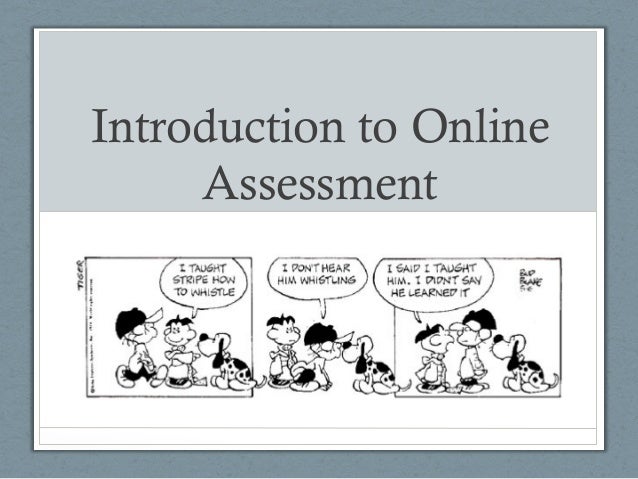
Assessment in the on-line learning environment.


How has performance and assessment changed over the years?
1. Emphasis is on ability to locate and apply knowledge quickly and efficiently
2. Students are expected to communicate ideas effectively.
3. Age of information
4. No longer one defining source of information
5. "Answers" readily available with technology-no longer need hours of research

How does Assessment differ in the virtual classroom?
  • Time
  • Space
  • Asynchronous

Leading through difficult but necessary conversations


Barriers to having difficult conversations? See hand out page 3

How do we know when a difficult conversation is necessary?

Incremental conversations - can't expect to force the change with one conversation.
Is it going to get worse before it gets better.

Earn Trust, earn trust, earn trust. Then you can worry about the rest. Seth Godin
Integrity builds trust.
Advancing the best interest of children.
To build trust is to be predictable.

Preparation is the key!!! - See slide for graphic

Suggestion starters - last 3 slide.

Mark Weber - Managing Difficult (Problem Solving) Conversations

Delivering difficult messages

Conversation that you don't know what the right outcome is....need to move to a better place.

No research to support that people learn best from a particular learning style.
Data actually shows - Teaching matters (good, effective, structured, scaffolding technique)

The person is responding to the situation you create for them.

Everyone goes through life asking:
What does a person like me do in a situation like this?
3 levers that can be shifted
- Person like me (can shift ex. prayer before meeting, doctor driving to work vs. doctor driving to son's graduation) Many selves inside everyone
- What type of situation is this? (setting, environment)
- Do - what are the rules (for the most part we are rule followers.)

1. watch high status others
2. practice behavior of high status others
3. habituate behavior
4. calcify

Developed habits to deal with things like conflict into life and the work place.

Identify habit and break out of it.
Objectives:
All difficult conversation have the same underlying structure.
Dynamics make the difficult conversation disastrous
Set of strategies to reduce the stress of difficult conversations

Resource: Difficult conversations; how to discuss what matters most.

Difficult conversations cannot be made easy - that is why they are difficult.
Will the outcome be better or worse.

Critical Psychological Context

1. When beginning a difficult conversation let the other person talk first.
2. Shut up and listen.


Leadership - Mentoring Reflection

mentoring

I had the opportunity to sit in on a Special Education Visioning Committee meeting that was run by Laura Shoemaker.   The committee is made up of secondary and elementary administrators.  Laura felt it would be good for me to participate in the meeting as a participant to go through some of the strategies she had in place to help guide the decision making process.
Although I was a participant, I was able to view the meeting as an ‘outsider’ and look at how she ran the meeting.  The first thing she did was welcome and thank everyone, but she then elaborating on the importance of everyone being there, stressed that everyone’s voice would be heard and the ideas and recommendations that come from the group would be used to move Special Education in the WCDSB forward.  Setting the tone of the meeting in this format was very powerful, it gave everyone the sense that being there was important and it wasn’t just another committee meeting they were ‘voluntold’ to be a part of.  It also made everyone feel like what they have to say is important and it will be heard and taken into consideration as decisions are being made.
The active part of the meeting was not a typical “everyone sit around and discuss topics on an agenda”.   At their previous meeting Laura had the participants come up with Strengths, Weakness’, Opportunities, and Threats for the current role of the Special Education Teacher within the WCDSB.  We reviewed these notes and she then provided a research component about the role. We were to take 2-3 important points from each of the area's (Strengths, Weakness, Opportunities, and Threats) and write it on a sticky, the sticky was then placed onto a piece of chart paper on the wall.  Laura then had small groups go to each of the 4 pieces of chart paper and classify each of the sticky’s/points as negotiable or nonnegotiable items.  This was  very powerful exercise as it encouraged small group discussions about each item and whether it was something that could essentially be changed or didn’t need to change.  We then moved to each of the 4 areas and could reclassify each point as negotiable or nonnegotiable, once again creating very rich discussion about each point.
Before the meeting was adjourned, Laura refocused the group and encouraged everyone to use a similar structure for building capacity within staff. She also explained what the next steps looked like by reinforcing that our opinions would be used to drive/move forward the Special Education Vision.  She was also honest in the fact that she had to present the information to Executive Council who would also provide feedback.  She then reviewed what next steps and action items need to occur for their next meeting.

From my point of view I must say that it was one of the best committee meetings I’ve been a part of.  I think that setting the tone of the meeting at the beginning allowed everyone to realize that their voice was going to be heard and it was.  The structure of the meeting easily allowed for everyone to provide input, often times at meetings they can be overtaken by a few powerful/loud personalities and some of the other messages from others can be lost or intimidated to bring forth ideas/information.  Laura facilitated the structure but once everyone got into the exercise it drove itself, the discussion and questions that were raised were all coming from the participants with a few points of clarification from Laura.  I also realized that there was no ‘hidden’ agenda or ideas being pushed, everything was being driven by the participants which was also very much appreciated.

Friday, May 29, 2015

SLT presentations at RCSS

The afternoon of our PD Day today had each School Learrning Team present what they worked on this school year. At first glance I thought this was going to be a waste of time as I have 101 other things that need to get done. However, at the conclusion of the day I must say that this was a valuable experience to me as a guidance counsellor.  Too often I'm disconnecting from the classroom and don't see what types of pedagogy my colleagues are using on a daily basis. The SLT presentations opened my eyes to what my colleagues are doing and wow, they are doing some amazing things.  From science who is connecting their curriculum to the interests of the students through the use of GAFE tools, Math/numeracy using data to determine what strategies work best to increase grade 9 applied students EQAO scores (spiralling the curriculum, pathway changes, IEP's), English teaching an enriched/AP program at each grade level and working through the challenges and differences associated with this sting and sometimes overachieving students.
Overall, these presentations gave me insight into these program areas and I feel this knowledge will help me better counsel students into appropriate pathways and better explain specific courses.  I look forward to the next batch that will be presented at our staff meeting in 2 weeks. 


Wednesday, May 27, 2015

Google Sympiosium at Resurrection

GAFE-volution

Rolland Chidiac and Jessica Weber

What's the purpose of technology in education?  is it going 'revolutionize how we teach and what we teach?  Check out this video from veritasium
We are not limited by the experiences we can give to students. What limits learning is what can happen inside the students' heat. That is where the important part of learning takes place. ~Veritasium

The impact of technology integration on student learning has allowed students to be more engaged in the learning process because students are working in/with a medium they use everyday and are  comfortable in...i.e. technology.  Students also feel they have control over their learning as technology gets weaved into pedagogy.  The importance is not to use technology because it's technology but to use technology to help improve pedagogy.


Thursday, May 14, 2015

University Dialogue 2015


Phil Hedges from Ministry of Education provided an update from a Student Success Perspective. Below he outlined all the student success initiatives the ministry is funding in Ontario Secondary Schools.  The biggest 'take always' I felt from his presentation are the following. 
- the Key Elements of Student success is what works with one student might not work with another. That's why the ministry has provides lots of different strategies
- The role of the guidance counsellor is to work with students to help them learn the skills to make their own plans. NOT tell them what to do with their life.

Below is listing if student success initiatives. 

5 Year Cohort Graduation rates have increased from 68 to 84% since 2003/2004

Strategies to regain credit.


  •  Full course repeat, summer school, credit recovery.
  •  Majority repeat course, then summer school, credit recovery.
  • Another failure in grade 10 most successful was summer school
Currently 214 secondary schools involved.
76% of school that focused on math saw an improvement.
8000 returned
2788 graduated
Taking some responsibility for their plan and have the confident in their ability to implement it.
Combine multiple courses together
Gr. 5⁄6 students are clients, gr. 11/12 students build apps.
- does not capture accurate data,  need to include apprenticeship, and out of province schools. 
12% of students are involved in coop program.
Disengaged and underachieving students
Footprint 3.7%
Retention 88%
Success 88%
Post secondary conversion: 31% applied to college two years later of those 82% registered.
Growth of 8 sectors to 19 sectors
600 to 44000 students
Footprint 12%
How are Universities supporting acknowledging SHSM
46% of crown wards graduated high school.
  - fact access
  - early identification  

School support initiative.
Targeted support to selected secondary schools

Achievement gap between applied and academic are doing in EQAO math 42% to 38% from 2009-2014 Gap is increasing in literacy 35-44%
Re Engagement Initiative 12 & 12+ 16000 contacted

Creating Pathways to Success Education and Career life planning program
Goal is to leave high school with a PLAN.
Expansion of experiential learning
help kids connect learning in the classroom to learning outside the classroom. teach student what reflection is and how to use it to deepen their learning.
Pilot projects

Transition rates from secondary to college / University

Coop Footprint

Dual Credits

Specialist High Skills Major

Pathways to apprenticeship OYAP participants 24849

Children and Youth in Care\

Mental health and addictions strategy priorities
  - Help for vulnerable children and youth with unique needs